Bariatric surgery · Cancún
Bariatric surgery with nutritional follow-up and coordinated support before and after the procedure.
Gastric sleeve surgery is one of the most requested bariatric procedures worldwide, and also one that raises legitimate questions about safety, long-term results, and what the lifestyle change after surgery really involves. This guide aims to answer those questions honestly, not just with enthusiasm.
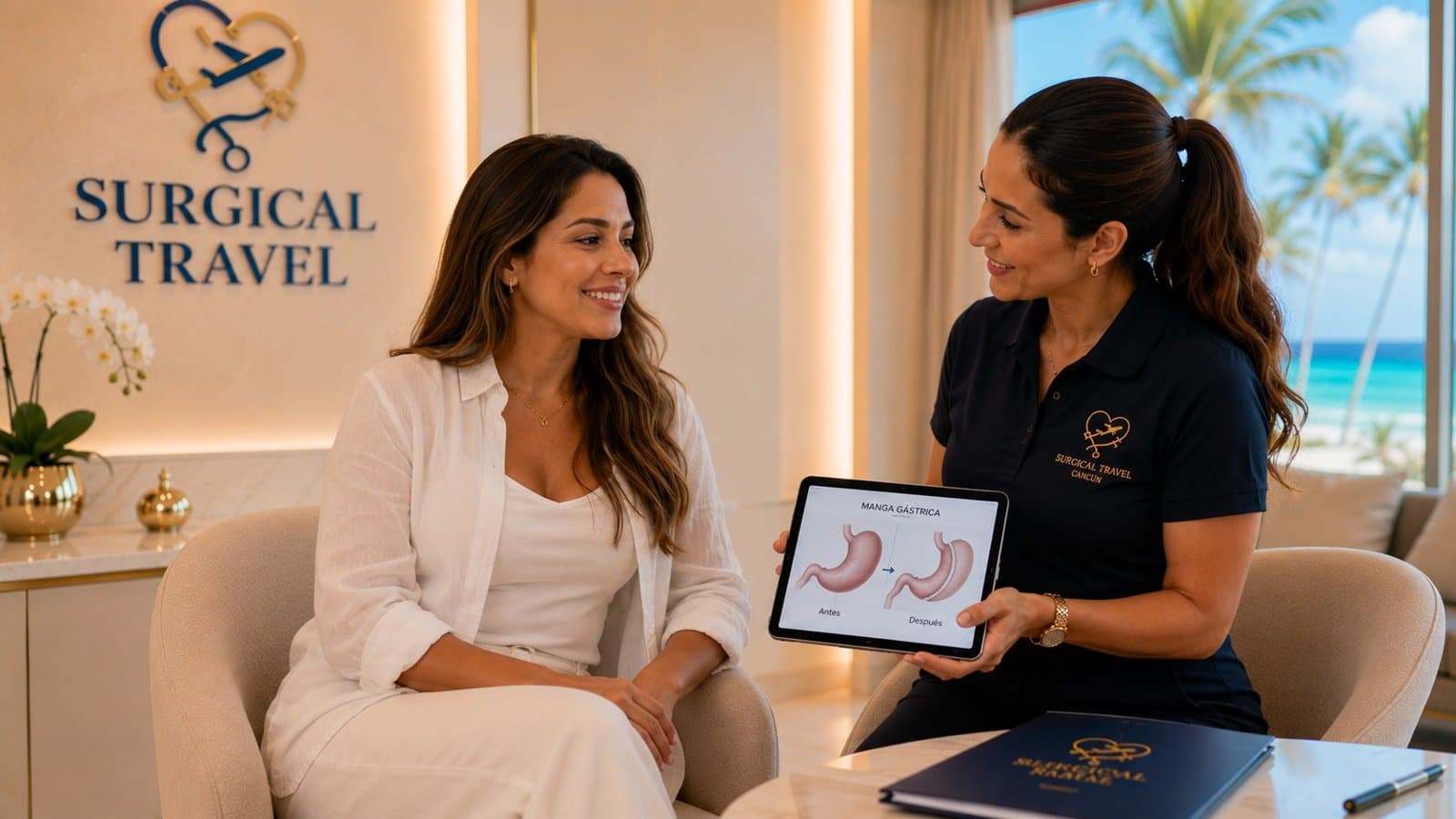
It's a bariatric procedure that reduces the size of the stomach (to approximately 15-20% of its original size), removing a portion of it through laparoscopic surgery. This physically limits the amount of food that can be consumed, and also reduces production of a hormone (ghrelin) related to appetite.
Unlike gastric bypass, the sleeve doesn't reroute the intestinal tract — it only changes stomach size, which has different implications for how nutrients are absorbed long-term.
It's generally considered for people with an elevated body mass index (BMI), especially when there are associated conditions like type 2 diabetes, hypertension, or sleep apnea, and when other weight-loss methods haven't been enough. The final decision depends on a complete medical and nutritional evaluation — it's not a procedure decided on aesthetic preference alone.
Before surgery, an assessment is done with the bariatric surgeon, along with lab work and a nutritional evaluation — this step isn't optional, it's part of confirming the procedure is safe for your specific case.
The surgery itself is performed laparoscopically (small incisions), usually takes between 1 and 2 hours, and requires 1 to 2 nights of hospitalization for observation before discharge.
Initial physical recovery (resuming light activities) usually takes between 1 and 2 weeks. But the most important part of "recovery" isn't physical, it's habit-based: the first few months require a progressive diet (liquids, then purees, then soft solids) and permanent adjustments to how and how much you eat.
Ongoing nutritional follow-up — not just in the first few weeks, but for months — is what most influences the procedure's long-term success. Surgery without that nutritional support significantly reduces its chances of sustained success.
A bariatric procedure doesn't end on surgery day — it barely begins there. That's why our support includes nutritional guidance during the first weeks of recovery, not just transfers and travel logistics. Coordinating your bariatric surgery in Cancún means having a certified medical network, an accredited hospital, and a coordinator who provides real follow-up to your process — not just on the day of the operation.
Pending real photos with signed consent, taken with a consistent framing protocol.
Your procedure is assigned within our network of certified bariatric surgeons, holding the specific bariatric surgery certification for this specialty. The exact name and certification are confirmed during your assessment.
Lab work and a nutritional assessment are required before confirming surgery.
Yes, our support includes nutritional guidance during the first weeks of recovery.
No commitment — a coordinator will reach out within 24 hours.
Prefer WhatsApp instead?
Chat on WhatsApp