Bariatric surgery · Cancún
A more complex bariatric procedure, coordinated with an accredited hospital and close medical and nutritional follow-up.
Gastric bypass is one of the most studied bariatric procedures, with decades of clinical backing worldwide. Unlike the gastric sleeve, it also changes the intestinal route — which changes several important things worth understanding before deciding.
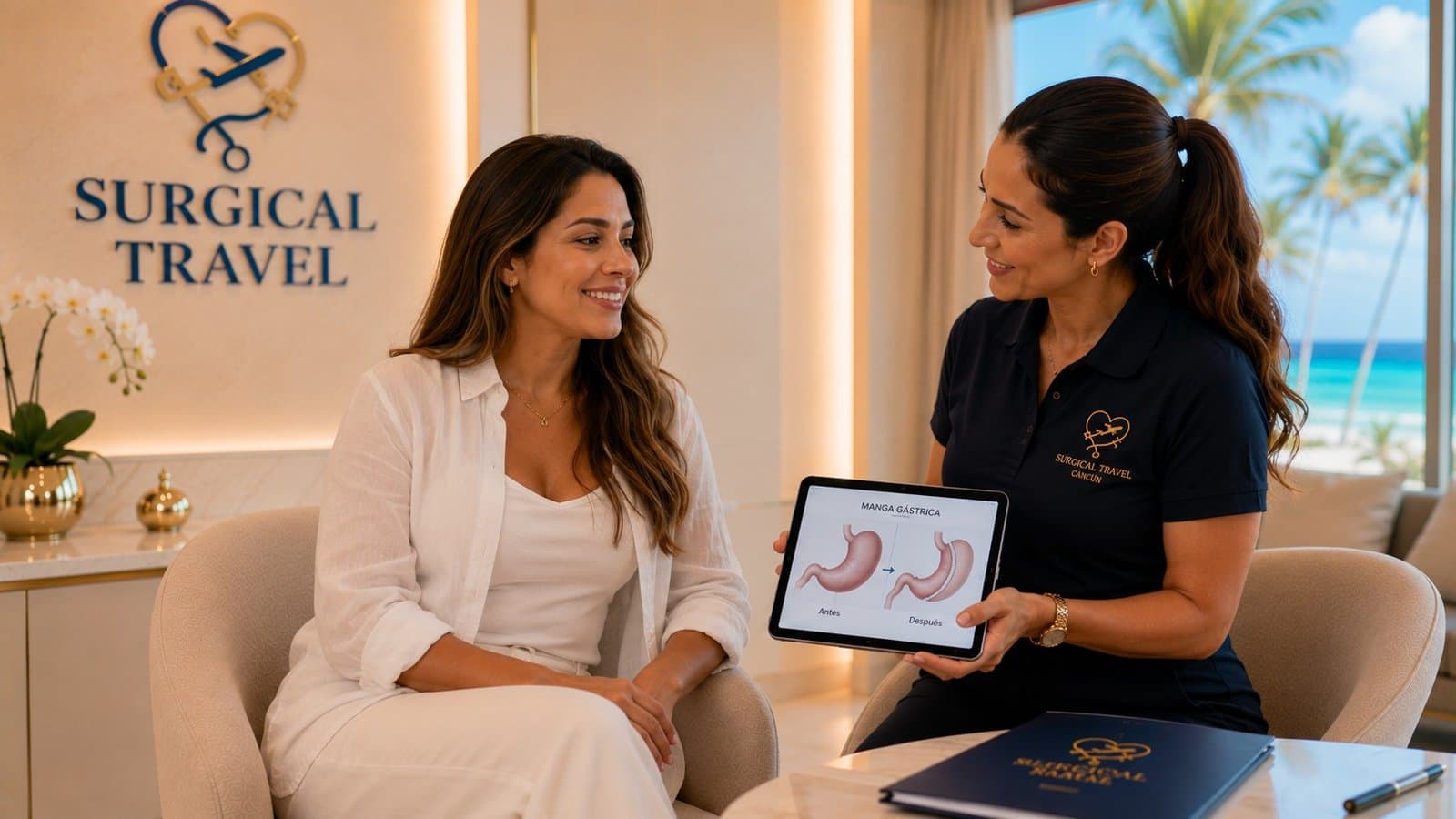
It's a bariatric procedure that creates a small pouch at the top of the stomach and connects it directly to a further section of the small intestine, bypassing a portion of the stomach and intestine. This reduces the amount of food you can eat, and also changes how certain nutrients are absorbed.
Unlike the gastric sleeve, which only reduces stomach size, bypass also changes the intestinal route — which is why it often produces faster initial weight loss in many cases, but also requires stricter lifelong vitamin supplementation.
It's generally considered for people with an elevated BMI, especially when there's severe gastroesophageal reflux or uncontrolled type 2 diabetes — conditions where bypass often shows better results than the sleeve, based on each case's medical evaluation.
As with any bariatric surgery, the final decision depends on a complete medical and nutritional evaluation — it's not a procedure chosen based on personal preference alone among bariatric options.
Before surgery, an assessment is done with the bariatric surgeon, lab work, and a nutritional evaluation — same as with any bariatric procedure, this step confirms bypass is safe and appropriate for your specific case, not just the sleeve.
Surgery is performed laparoscopically, usually takes 2 to 3 hours (longer than the sleeve, due to greater technical complexity), and requires 2 to 3 nights of hospitalization for observation.
Initial physical recovery usually takes 2 to 3 weeks. Like with the sleeve, the diet is progressive (liquids, purees, soft solids), but bypass requires an additional commitment: lifelong vitamin and mineral supplementation, since the change in intestinal route permanently reduces absorption of certain nutrients.
Ongoing nutritional and medical follow-up is, if anything, even more important than with the sleeve — which is why support can't end on surgery day.
Given the lifelong supplementation commitment that bypass involves, real post-operative follow-up — not just the first few weeks — is essential. Coordinating your surgery in Cancún means having a certified medical network, an accredited hospital, and nutritional guidance that supports you well beyond surgery day.
Pending real photos with signed consent, taken with a consistent framing protocol.
Your procedure is assigned within our network of certified bariatric surgeons, holding the specific bariatric surgery certification for this specialty. The exact name and certification are confirmed during your assessment.
Bypass also reroutes part of the digestive tract, not just reducing stomach size. Your surgeon will tell you which fits your case best.
A minimum of 10 days is recommended for initial postoperative check-ups.
No commitment — a coordinator will reach out within 24 hours.
Prefer WhatsApp instead?
Chat on WhatsApp